Bahnhofstr. 53 – Family Lindenberg History
This page was translated from the German original with the help of AI. The German version is authoritative.
Early history: the Lindenberg family
Around 1930, a large carved wooden panel dating from 1806 and bearing a Jewish prayer was in the house at Bahnhofstrasse 53 (old number: 62/63). The Hoyaer Wochenblatt reported:
A memento of days long past.
was found during clearing work carried out in the old Lindenberg commercial building. It was a wooden panel with a neatly carved inscription that once adorned the Bärenstall on the Kirchplatz. Two sayings, written in Hebrew and in German, can still be read clearly. The German inscription reads as follows: “A prayer of David. Incline Thine ear, O Eternal One, and hear my prayer. Let Thine exalted eye be ever open upon this house. For only under Thy watch is it safe. 1806.

In the early 1970s, this wooden panel was found again during work in the house. The Kreiszeitung reported that the German inscription was on the right-hand side and the Hebrew inscription on the left-hand side, and also printed a photograph of it.
The beam dated from 1806, but the Lindenberg family had probably been resident in the town for longer. A (David) Abraham is mentioned in documents from 1777. On behalf of the Jewish community, he applied for the Vilsen market day to be moved to another day because it fell on the Sabbath. 2)
In the Staatsarchiv Bremen, a “Lintenberg, Abraham David, merchant at Vilsen” is registered for the period of French rule (c. 1803-1815). He was married to Perel Meier, died in Vilsen on 7 February 1832 and is buried in Hoyerhagen. 3)
In 1820, an (Abraham?) David Lindenberg applied for the Vilsen market to be postponed because it coincided with a Jewish holiday. A David Abraham Lindenberg, who was perhaps Abraham David’s son or brother, was married to Clara Meyer, born on 25 January 1783 in Moor (see the Meyer family). David Abraham died on 22 November 1810 and is buried in the Jewish cemetery in Hoyerhagen. 4) 5)
Clara Meyer, widowed Lindenberg, remarried Cohn, died in Vilsen on 30 September 1862 and is also buried in Hoyerhagen. As her husband died young, she may have had to provide for her children on her own, so that in 1818 the merchants’ guild of the market towns (Flecken) brought a complaint against a widow Lindenberg for peddling. However, this may also have been the widow of Abraham David. 6)
Before 1840, David Lindenberg’s daughter Hendel (Henriette?) married Schrage Fajs Schragenheim from Rethem. The Schragenheim family later moved to Vilsen. 7)
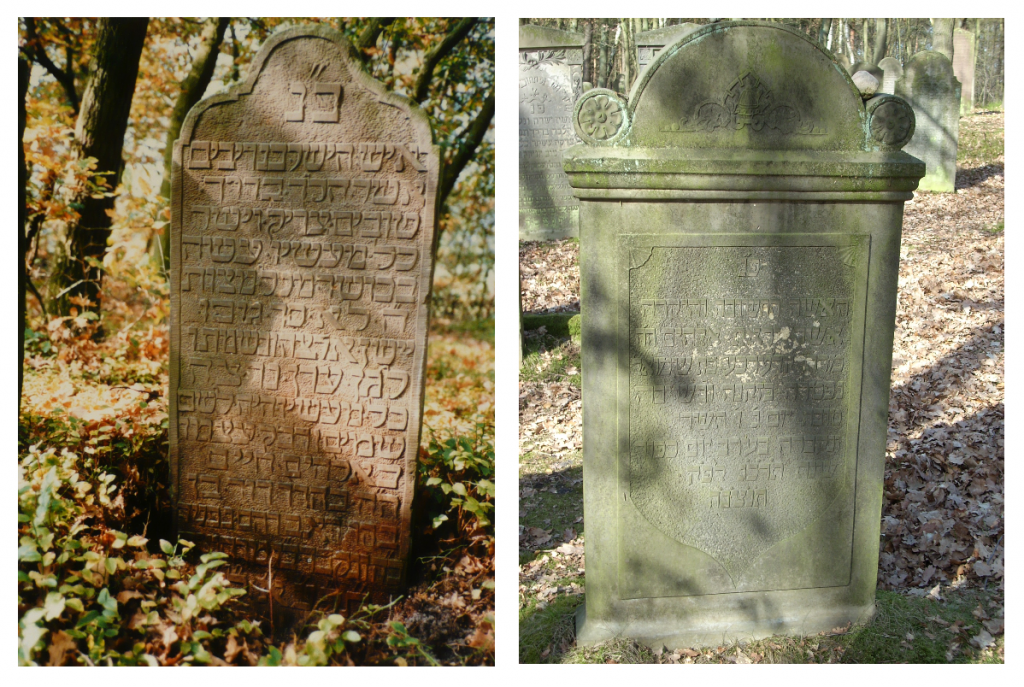
Before 1800, Jews in Germany were tolerated only as so-called protected Jews (Schutzjuden), i.e. they had to buy a letter of protection and pay other fees. During the French occupation, Jews obtained nearly equal legal status, which, however, was partly withdrawn again afterwards. Despite this unequal treatment, the Lindenbergs and other Jews apparently succeeded several times in having the market moved because of the Sabbath. In 1723, the municipal council of Bruchhausen apparently even postponed Easter because it fell on a Jewish holiday. 9)
As a result of the legal equality granted during the French occupation, Jews in Germany also adopted family names on the German model for the first time. In the Jewish naming convention, a person’s second name is normally formed from the father’s first name. It is therefore likely that the names Abraham-David and David-Abraham follow the Jewish convention, while the name Lindenberg was adopted in addition as a family name.
1830: Family Gerson David Lindenberg
Gerson David Lindenberg (*1808), the son of David Abraham and Clara, is recorded for house no. 63 from 1836 onwards 10). He acquired further surrounding buildings, some of which, like the old “Bärenstall”, were probably demolished in 1908 for the construction of the Assessorstrasse. In the building tax roll of around 1880, the property is listed under the double building number 62/63 (plot 142). 11)
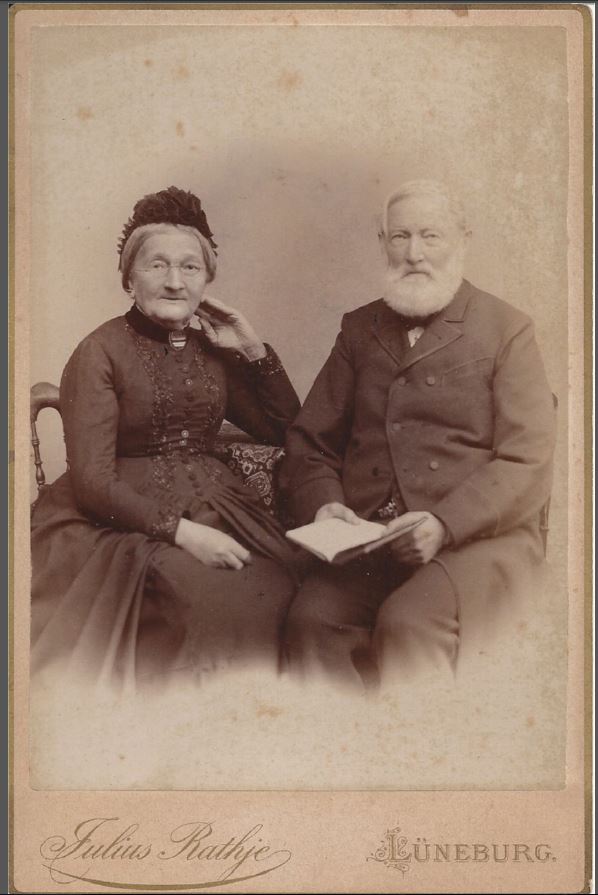
The size and central location of the property by the church suggest that Gerson David Lindenberg was a wealthy man. He founded his business in 1833 and thus owned the third-oldest linen trading house in Vilsen. In the reports of the linen inspection office (Legge), it is regularly named as the second most important after Hoppe.
A little way out of the town, by the brook, there was also the common Vilsen bleaching ground with everything it required. In V[ilsen] itself there was a Legge, and therefore also a Legge master [etc.] Much flax trading a[nd] flax prepar[ati]on in the whole area, even a flax market, which was held on the old churchyard […]Cloth goods were traded esp[ecial]ly by Hoppe, who also had a large timber business, and by the Jew Lindenberg, from whom one b[ou]ght at very good prices a[nd] who himself did not look Jewish at all…13)
With his wife Rosa, née Salomon (*1810), from Winsen, Gerson David had the children Henriette (*1836), Salomon (*1837), David Gerson (*1839), Sophie (*1844) and Adolf (*1849). A high social standing is also indicated by the fact that two of his daughters and one son married into the Heinemann family of Lüneburg, textile merchants and bank owners who belonged to Lüneburg’s upper class. The Heinemann bank was a predecessor of Deutsche Bank. His daughter Henriette was the wife of the wealthy benefactor Markus Heinemann and the mother of 17 children. His daughter Sophie married Salomon Heinemann, and his son Adolf married another relative. 14) 15) 16)
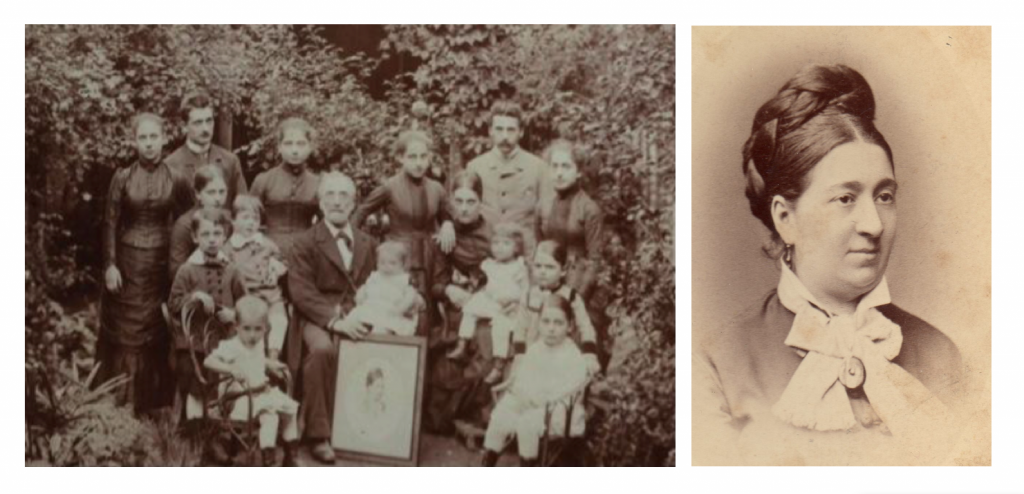
1870: Family Salomon Lindenberg
In old age, Gerson David and Rosa Lindenberg moved to Lüneburg to live with their children, while the eldest son Salomon took over the linen trading house in Vilsen and ran it under the name S. Lindenberg. Salomon Lindenberg was also a successful merchant who probably shipped goods as far as North and South America. In 1910, the Inspektionsbote reported that around 1873 the turnover of the Lindenberg firm amounted to 29,000 metres of linen, corresponding to 15,900 Mark. This was the second-highest turnover in Vilsen, ahead even of that of the Vaßmer firm. 18)
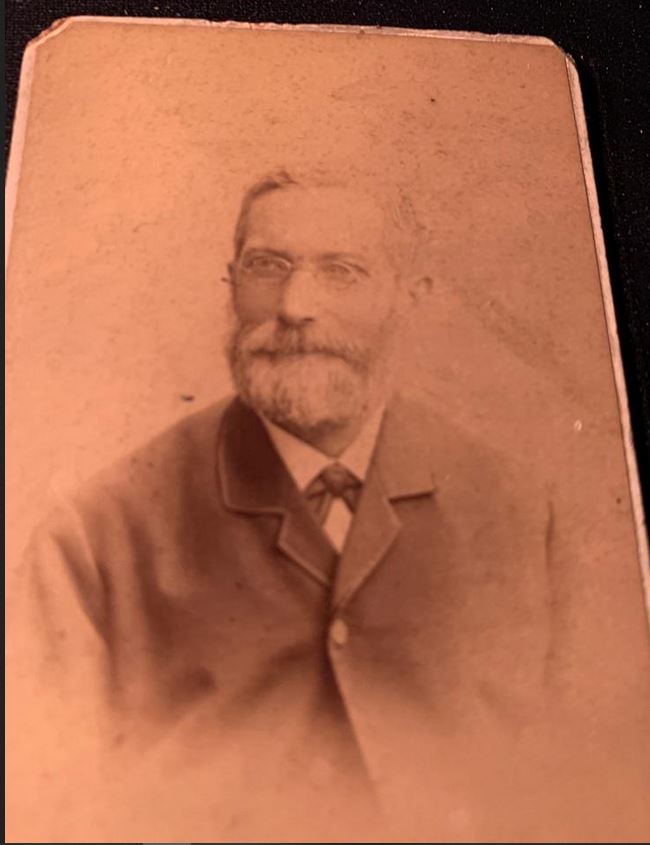
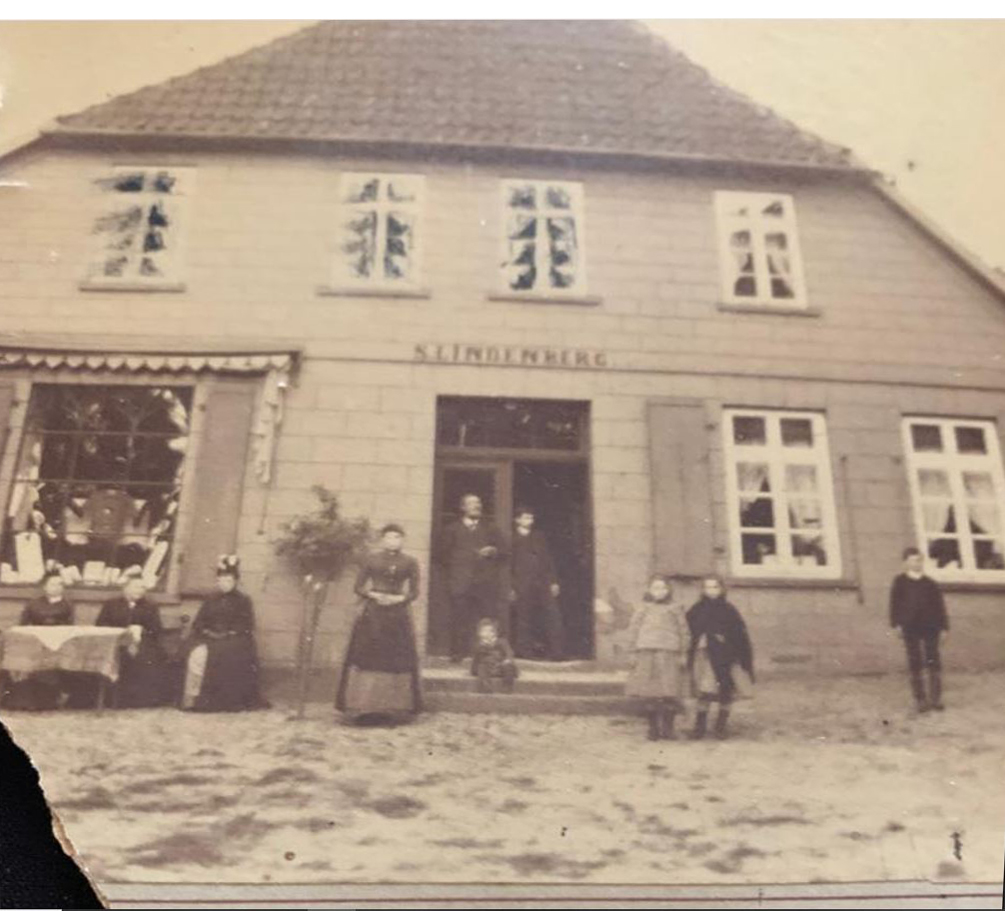
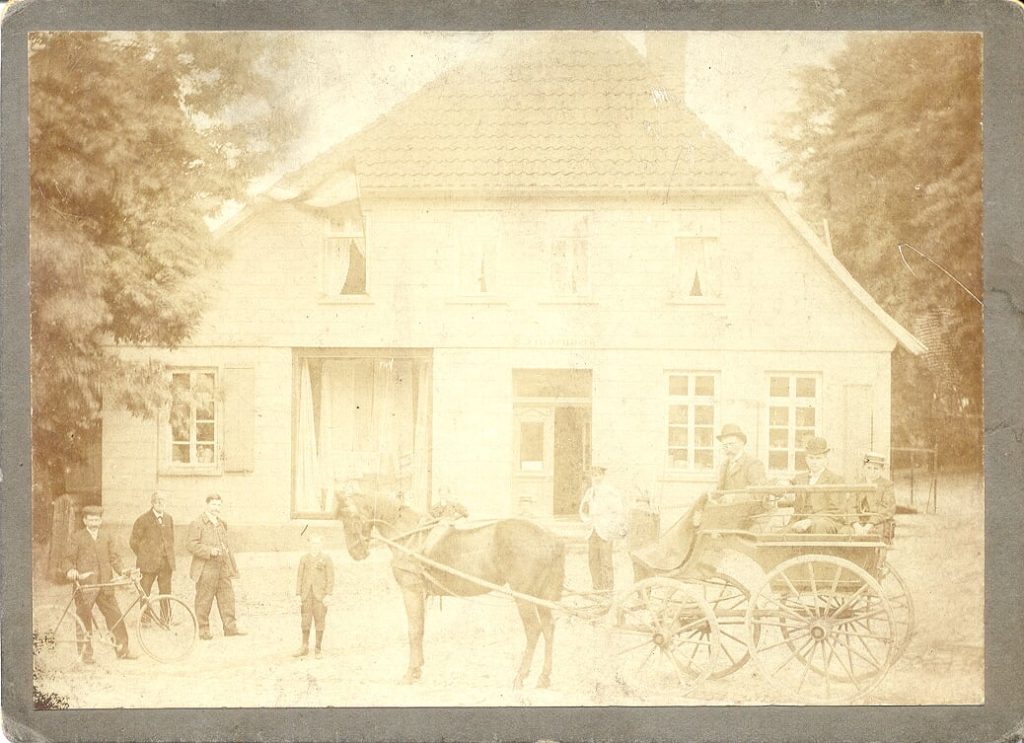
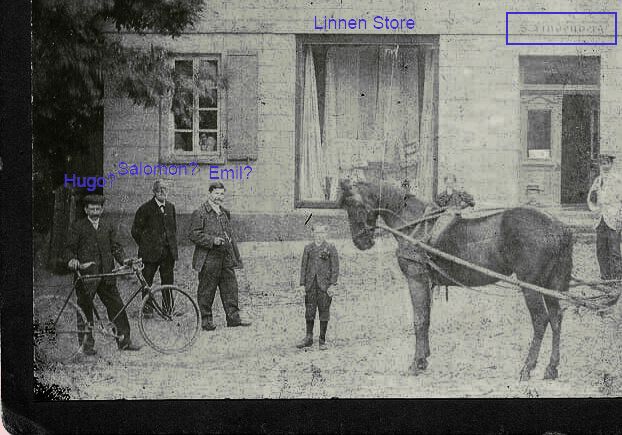
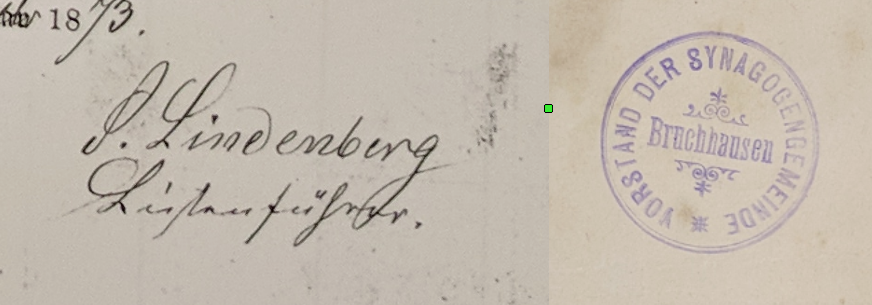
Salomon Lindenberg was a member of Masonic lodges in Bremerhaven and Hamburg, which also suggests that he was active in the overseas ports. Around 1870 he was the list keeper (Listenführer) of the synagogue community of Bruchhausen. 23)
He married Caroline Wolfers (*1844), with whom he had 5 sons and 2 daughters: Alfred (*1870), Richard (*1871), Emil (*1874), Klara (*1878), Hugo (*1878), Anna (*1880) and Otto (*1886). Sadly, Caroline died as early as 1890 at the age of 46 and was deeply mourned by her husband and her children, who were still minors. Her gravestone bears a butterfly.
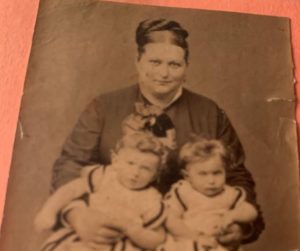
Salomon remarried fairly quickly, probably also so that his children would have a mother; his second wife was Elise Pommer (*1853) from Alt-Strelitz. With her he had two more children: Georg (*1892) and Martin (*1893).
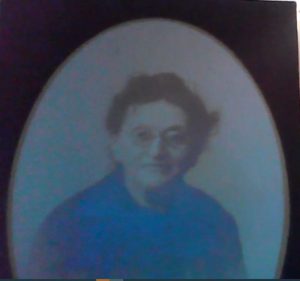
Towards the end of the 19th century, linen production declined in importance, so the Vilsen merchants sought to revive business. Together with Jakob Schragenheim, who was also Jewish, and the other merchants Hoppe, Vaßmer, Spilker and Achilles, Salomon Lindenberg founded the linen weaving school in Vilsen, from 1899 the Genossenschaft Preussische Webereilehrwerkstätte zu Vilsen. 27)
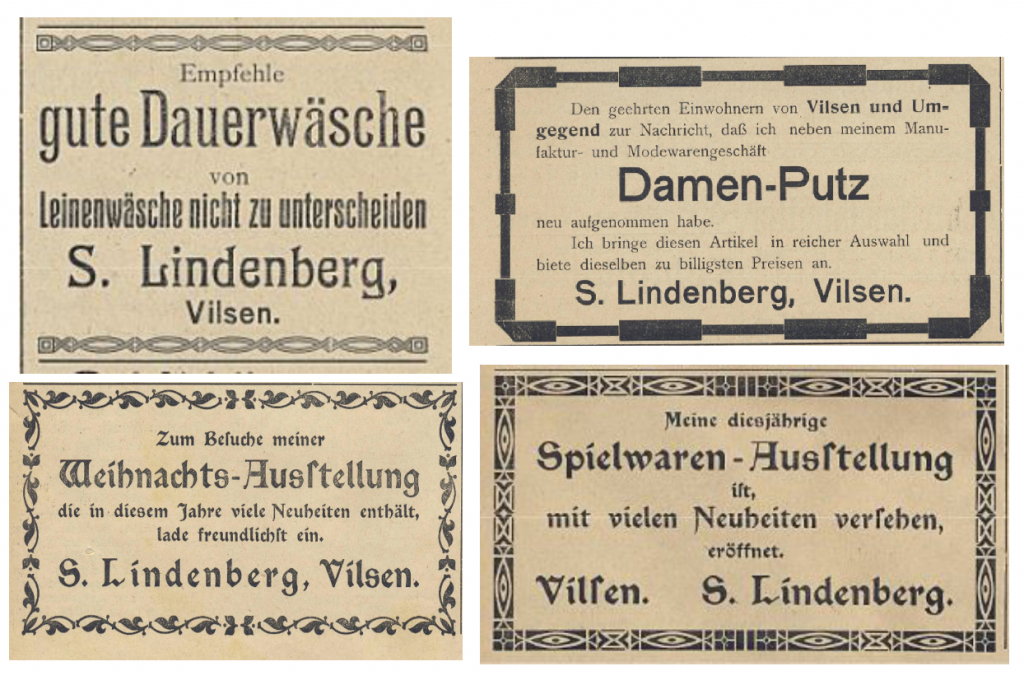
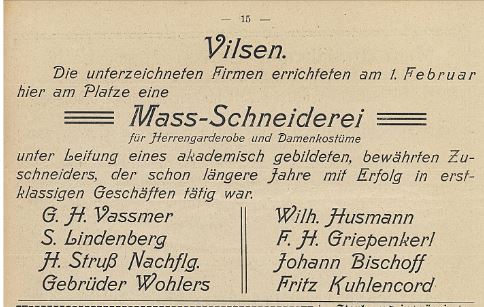
As a further measure, the range of goods at S. Lindenberg was extended, so that by around 1910 toys and Christmas presents were also on offer. In 1914, the firm S. Lindenberg, together with the Vilsen firms Vassmer, Struß (Nachf.), Wohlers, Husman, Griepenkerl, Bischoff and Kuhlencord, founded a bespoke tailoring business for men’s and women’s clothing. These innovations were probably already the work of the sons Richard and Hugo Lindenberg, who were by then running the firm. Salomon Lindenberg died in 1917. From that year onwards, Emil Lindenberg is recorded as the owner of the Lindenberg commercial building. 28)
References
| ↑1 | GemA BVI 03 Literatur 50.341.01 |
|---|---|
| ↑2 | GemA BVI, 20 Bruchhausen-Vilsen, 20.331.03 |
| ↑3 | Schmidt-Bollmann, Günther, Friedhof Hoyerhagen [DVD], supplement to: Hornecker, Elfriede (2017) Woher.Wohin: jüdische Familien im Hoyaer Land, Hoya: Heimatmuseum Grafschaft Hoya e.V. |
| ↑4 | GemA BVI, 20 Bruchhausen-Vilsen, 20.331.03 |
| ↑5 | Schmidt-Bollmann, Günther, Friedhof Hoyerhagen [DVD], supplement to: Hornecker, Elfriede (2017) Woher.Wohin: jüdische Familien im Hoyaer Land, Hoya: Heimatmuseum Grafschaft Hoya e.V. |
| ↑6 | GemA BVI, 01 Kopien, 25.722.01 |
| ↑7 | Schmidt-Bollmann, Günther, Friedhof Hoyerhagen [DVD], supplement to: Hornecker, Elfriede (2017) Woher.Wohin: jüdische Familien im Hoyaer Land, Hoya: Heimatmuseum Grafschaft Hoya e.V. |
| ↑8 | Schmidt-Bollmann, Günther, Friedhof Hoyerhagen [DVD], supplement to: Hornecker, Elfriede (2017) Woher.Wohin: jüdische Familien im Hoyaer Land, Hoya: Heimatmuseum Grafschaft Hoya e.V. |
| ↑9 | GemA BVI, 20 Bruchhausen-Vilsen, 20.331.03 |
| ↑10 | Information from Dr Mestwerdt |
| ↑11 | NLA HA, Hann. 142, Nr. 454 |
| ↑12 | Image rights: H. Schuessler, née Lindenberg, USA |
| ↑13 | Rahlfs , Heinrich [1861-1867 teacher, sexton and organist in Vilsen], Autobiografische Aufzeichnungen, manuscript in: Stadtarchiv Walsrode, p. 461 |
| ↑14 | Information from the Lindenberg family |
| ↑15 | Information from Mr Greve, Stadtarchiv Syke |
| ↑16 | Information from Ms De Rudder, University of Hamburg |
| ↑17 | Image rights: H. Schuessler, née Lindenberg, USA |
| ↑18 | Inspektionsbote 1910-08, http://www.gemeindespiegel-blender.de |
| ↑19 | Image rights: Lindenberg family, USA |
| ↑20 | Image rights: Lindenberg family, USA |
| ↑21 | Image rights: Lindenberg family, Argentina |
| ↑22 | Image rights: Lindenberg family, Argentina |
| ↑23 | Samtgemeindearchiv Bruchhausen-Vilsen |
| ↑24 | Samtgemeindearchiv Bruchhausen-Vilsen |
| ↑25 | Image rights: Lindenberg family, USA |
| ↑26 | Image rights: Lindenberg family, USA |
| ↑27 | See also: https://www.kreiszeitung.de/lokales/diepholz/bruchhausen-vilsen-ort52437/spuren-leineweber-bruchhausen-vilsen-6790525.html |
| ↑28 | Inspektionsbote 2.1914 http://www.gemeindespiegel-blender.de |
| ↑29 | Inspektionsbote http://www.gemeindespiegel-blender.de |
| ↑30 | Inspektionsbote http://www.gemeindespiegel-blender.de |